
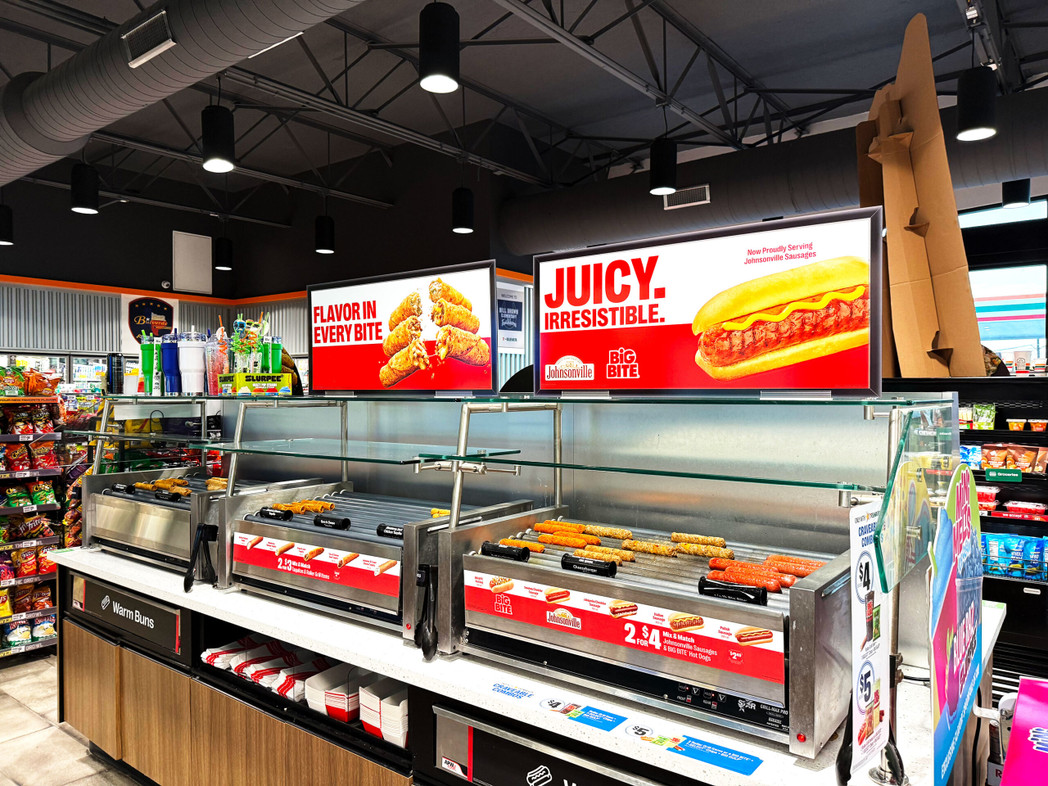
How Convenience Stores Lose $50,000+ Per Year at the Roller Grill During Peak Hours
Posted by FOODPROS on February 16, 2026
The Hidden $53,820 Leak in Your Hot Food Program
Most convenience stores do not lose revenue because of low traffic.
They lose revenue when traffic is highest.
Peak hours expose friction. And friction leaks revenue.
If your roller grill station stalls for even five transactions per hour during peak demand, the math compounds quickly.
At $2.99 per item:
5 missed transactions per hour
$14.95 per hour
$149.50 per day
$4,485 per month
$53,820 per year
From one SKU.
And most teams never see it.
The Real Problem Is Not Traffic. It Is Performance.
When hot food programs underperform during peak windows, the cause is rarely demand. It is friction.
Friction shows up as:
Limited roller grill capacity
Blocked sightlines
Slow cleaning
Awkward replenishment
Labor bottlenecks
Visual clutter
Customers do not wait for operational delays. They move.
That movement is invisible revenue loss.
Friction Is Mechanical
Roller grill systems that cannot hold peak volume create hesitation. Empty rollers signal low freshness. Overcrowded rollers signal disorganization. Neither drives confidence.
When roller grill capacity does not match demand, the station becomes reactive instead of profitable.
Explore high-capacity roller grill systems designed for real-world peak performance.
Capacity is not an upgrade. It is a revenue control.
Friction Is Visual
Customers make hot food decisions in seconds.
Clear sightlines. Immediate readability. Full product visibility.
When food is partially blocked, poorly lit, or visually cluttered, conversion drops even when traffic remains steady.
We expanded on how modern merchandising design influences both food safety and sales performance in this deeper breakdown of roller grill strategy.
Visibility is not aesthetic. It is mechanical psychology.
Friction Is Operational
Peak windows compress time.
If cleaning requires two hands and service disruption, throughput slows. If replenishment blocks customers, sales stall. If sanitation feels cumbersome, staff avoids it.
The result is hesitation.
Solutions like the EZ-Tilt Sneeze Guard™ reduce cleaning friction while maintaining full visibility and compliance during peak hours.
Design should reduce resistance, not introduce it.
The Difference Between Busy and Profitable
The most profitable hot food stations are not the busiest.
They are the ones that remove hesitation.
Clear sightlines.
Immediate reach.
Fast cleaning.
Simple replenishment.
When a station feels effortless to the customer and effortless to the team, conversion increases without adding traffic, labor, or square footage.
That is performance engineering.
Where FOODPROS Fits
FOODPROS supports operators and category leaders who understand that equipment alone does not create growth.
Retail mechanics do.
FOODPROS works alongside Food Concepts, Inc. (FCI) to deliver engineered roller grill systems built for real world volume, durability, and compliance. When merchandising strategy and manufacturing expertise align, peak hour performance holds under pressure.
Because growth without execution turns into leakage.
And leakage compounds.
The Real Question
If five transactions per hour disappear at peak, what is your station actually costing you?
If the math feels uncomfortable, it should.
Peak demand is not where stores win or lose traffic.
It is where they protect or leak revenue.
And most teams never measure that difference.