
Most stores try to increase sales by adding more.
More products
More SKUs
More options
That approach creates complexity, not performance.
Basket size does not increase because more items are available.
It increases when the right items are placed where customers are already making decisions.
Customers Do Not Go Looking for Add-Ons
Customers do not walk into a store planning to buy more.
They come in with a primary intention:
Coffee
A hot food item
A quick stop
Everything else is decided in the moment.
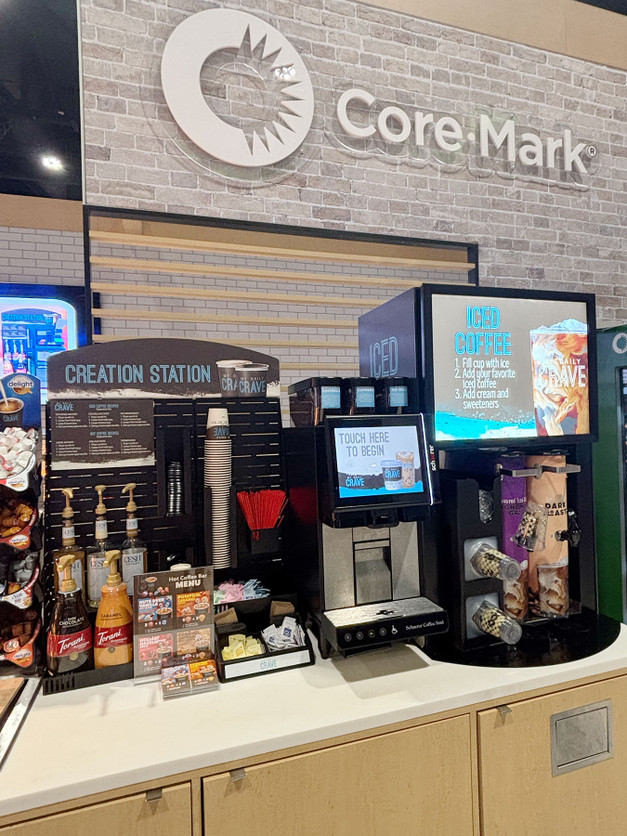
At the coffee station
At the roller grill
At checkout
These are the moments where additional purchases happen.
If the right products are not visible and easy to grab in those moments, they are not part of the decision.
The Role of Placement in Increasing Basket Size
Placement is not just about where products sit.
It is about when they are seen.
The highest-performing stores place complementary items:
- Next to coffee stations
- Around hot food areas
- Within reach at checkout
This is often referred to as product adjacency, placing related items together at the moment a customer is already engaged.
When done correctly, it removes friction and makes the next item obvious.
Visibility and Organization Drive Action
Clutter hides opportunity.
When products are difficult to see or understand, customers move past them without engaging.
Clear, organized merchandising changes that.
Products that are:
- visible
- grouped logically
- easy to access
are far more likely to be picked up.
This is not about pushing more products.
It is about making existing products easier to choose.
Impulse Purchasing Is Structured, Not Random
Impulse purchasing is often misunderstood.
It is not unpredictable.
It is influenced by environment.
When customers are:
- waiting
- pausing
- transitioning
they are more likely to add something to their purchase.
If products are placed in those moments with clarity and accessibility, they become part of the transaction.
This is how basket size increases without additional effort from the customer.
Where Impulse Merchandisers Fit
Impulse merchandisers are designed specifically for these decision moments.
Placed at checkout, near coffee stations, and within high-traffic areas, they bring together complementary products in a way that is easy to see and easy to access.
Instead of relying on scattered placement, impulse merchandisers create a dedicated space for add-on purchases, helping operators capture last-second decisions more consistently.
When used correctly, they turn small areas into high-performing sales zones without requiring additional space or product expansion.
How Merchandising Systems Support Execution
Executing this consistently across a store requires structure.
Merchandising systems such as PanelRak™ are designed to:
- create clear product zones
- improve visibility in high-traffic areas
- support consistent placement across locations
Instead of relying on individual setups or inconsistent layouts, these systems help standardize how products are presented and accessed.
That consistency is what allows performance to scale.
What to Change First
For operators looking to improve basket size, the starting point is not adding more products.
It is evaluating:
- where decisions are happening
- what customers see first
- what is within reach in those moments
Small changes in placement and visibility can have a measurable impact.
Final Thought
Increasing basket size is not about offering more.
It is about making better use of what is already there.
When products are placed where customers are already engaged, clearly visible, and easy to act on, they become part of the purchase naturally.
That is how performance improves.
FAQS
How do you increase basket size in a convenience store?
By placing complementary products in high-traffic decision areas such as coffee stations, foodservice zones, and checkout.
What is impulse merchandising?
Impulse merchandising is the strategic placement of products in areas where customers are most likely to make quick purchasing decisions.
Why is placement important in retail?
Placement determines when and how products are seen, which directly impacts customer decisions and sales.