
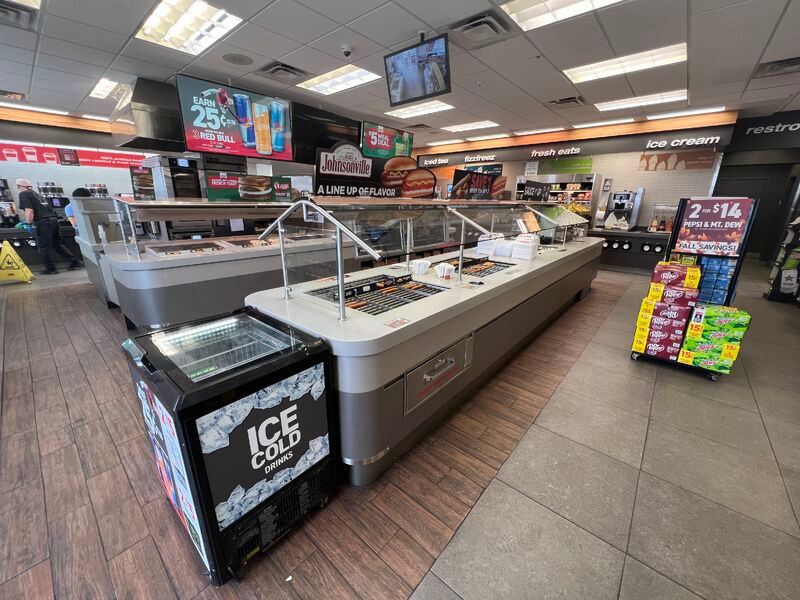
More equipment does not necessarily make a better c-store foodservice program.
The right equipment is the equipment that supports what you plan to sell, the volume you expect, the space you have available and the people who have to operate it every day.
A roller grill program has different requirements than bakery, pizza or hot grab-and-go. A single location has different considerations than a 50-store rollout. And equipment that looks right on paper may not be the right choice if it takes up too much space, is difficult to clean or creates unnecessary work for employees.
So before asking what equipment should we buy?, start with a more useful question:
What does this foodservice program actually need to work well?
This guide walks through the core equipment categories, the supporting pieces that are easy to forget and the operational questions worth answering before you buy.
Start With the Food Program, Not the Equipment
The food program should determine the equipment, not the other way around.
Start with what you plan to sell, when you expect to sell it and how customers will move through the space. From there, you can determine the capacity, footprint and supporting equipment the program actually requires.
| Food Program | Primary Equipment | Supporting Equipment | Key Buying Consideration |
|---|---|---|---|
| Roller Grill | Commercial roller grill | Sneeze guard, bun storage, tongs, dividers, condiment organization | Capacity, countertop space, visibility and cleaning access |
| Hot Grab-and-Go | Heated merchandiser or food warmer | Packaging, smallwares and countertop cooking equipment where needed | Holding needs, refill speed, power and visibility |
| Pizza | Countertop pizza oven | Heated holding or display where needed, packaging and serving accessories | Throughput, countertop space and electrical requirements |
| Bakery & Pastry | Countertop or floor-standing bakery display case | Trays, tongs and merchandising support | Capacity, customer access and available counter or floor space |
| Coffee & Beverage Support | Cup and lid organization | Condiment organizers and supporting smallwares | Counter flow, organization and replenishment |
Once the program is clear, the equipment decisions get much easier.
How Will Customers Be Served?
The same menu can require a different setup depending on how customers interact with it.
A self-service roller grill, bakery case or hot food display needs to account for customer access, food protection, product identification and ease of use.
An employee-served or made-to-order program may place more emphasis on staff access, workflow and speed of service.
Some programs use a combination of both.
Before choosing equipment, determine whether the program will be self-service, employee-served or a combination of the two. That decision can affect equipment configuration, food protection, merchandising and how the entire area is laid out.
How Much Capacity Do You Really Need?
More capacity is not automatically better.
The right capacity depends on expected sales volume, peak dayparts, product mix and available space. Larger equipment can hold more product, but it also takes up more room and may require more product to keep the display looking full.
For example, the FOODPROS 8033 roller grill holds up to 33 hot dogs and is 23.75 inches wide, while the FOODPROS 8055 holds up to 55 and is 35.75 inches wide. Both are just over 20 inches deep.
That roughly 12 inches of additional counter width adds 22 hot dogs of capacity. Whether that is valuable depends on how much product the store can actually sell during peak periods.
Before choosing equipment, look at:
- Expected customer traffic
- Busiest dayparts
- Number of products or SKUs
- How frequently employees can replenish
- Available counter or floor space
- Realistic sales volume
The goal is not to buy the biggest piece of equipment available.
It is to choose enough capacity to support demand without creating unnecessary footprint, labor or waste.
What Do You Need for a Roller Grill Program?
A roller grill program needs more than the grill itself.
A complete setup may include:
- Commercial roller grill
- Sneeze guard or food shield
- Bun cabinet or bun storage
- Tongs and tong holders
- Divider kits
- Condiment organization
- Supporting merchandising
FOODPROS carries roller grills in multiple sizes from FOODPROS, APW Wyott, Nemco and Star, along with sneeze guards, bun cabinets and other roller grill accessories.
Capacity is important, but it is not the only consideration.
Think about:
- Flat vs. slanted presentation
- Available countertop space
- How easily customers can see the product
- How the unit will be cleaned
- Whether capacity can be reduced during slower periods
- What accessories are needed to support the complete program
For example, the FOODPROS 8033 and 8055 both have separate front and rear heat controls, allowing operators to run less of the grill during slower periods. They also include removable drip pans for easier cleaning and do not require a ventilation system.
Those kinds of operational details matter because the best roller grill is not simply the one with the most capacity.
It is the one that fits the expected demand, available space and way the store actually operates.
What Equipment Supports Hot Grab-and-Go?
Hot grab-and-go programs need equipment that keeps food available, visible and at the appropriate holding temperature.
Depending on the menu, that may include:
- Commercial food warmers and heated merchandisers
- Countertop pizza ovens
- Convection ovens
- Heated holding or display equipment
- Packaging and supporting smallwares
The equipment should be selected around the way food moves through the operation.
Ask:
- Where is the food prepared?
- How long does it need to be held?
- How will customers see and access it?
- How quickly can employees replenish the display?
- What electrical capacity is available at the location?
Electrical requirements can vary even among countertop equipment.
For example, the Wisco 421 pizza oven oven operates on 120V and draws 12.5 amps, while the Wisco 561 operates on 120V and draws 14.2 amps. The Wisco 621 countertop convection oven operates on 120V and draws 10.9 amps.
That is exactly why electrical requirements should be checked before equipment is selected, not after it arrives.
A good hot food setup should make the path from preparation to purchase easier for both the customer and the employee running the program.
How Do You Choose the Right Bakery Display?
A bakery display case should do more than hold product.
It should make the assortment easy to see, easy to shop and easy for employees to replenish.
Countertop Bakery Cases
Countertop cases can make sense when:
- The assortment is relatively focused
- Counter space is available
- The display will sit near checkout or another high-traffic area
- Preserving floor space is important
Floor-Standing Bakery Cases
Floor-standing cases may make more sense when:
- The bakery program needs more capacity
- The assortment is larger
- Countertop space is limited
- The store wants the bakery area to have a stronger presence
The right choice comes back to the same questions we have been using throughout this guide:
How much are you selling, how much space do you have and how does the equipment need to work during the day?
Don’t Forget the Small Stuff
The primary equipment usually gets most of the attention.
The smaller pieces are what often determine whether the setup actually works well day to day.
Tongs need a place. Cups and lids need to stay organized. Condiments organizers need to be easy to reach and refill. Buns, packaging, utensils and other smallwares all need somewhere to go.
These items may not drive the initial equipment decision, but they can have a big impact on customer flow, cleanliness and how much time employees spend maintaining the area.
Can Customers Tell What They Are Buying?
Good equipment can still underperform if customers cannot quickly understand the offer.
Product identification, pricing, signage and merchandising should make it easy to see what is available and make a decision without unnecessary friction.
This becomes especially important in self-service programs.
Think about whether customers can quickly:
- Identify the product
- Understand the price
- See what choices are available
- Find the appropriate packaging or utensils
- Move easily from the equipment to condiments and checkout
Visibility is not only about seeing the food. It is also about understanding what is being sold and how to buy it.
Six Things Buyers Often Forget
1. How Will Employees Clean It?
Cleaning happens every day, so access matters.
Look at how easily employees can reach surfaces, remove trays or components and clean around the equipment.
If the unit is difficult to clean, that becomes an operational problem long after the purchase is made.
2. How Will It Be Replenished?
Think about how often product will need to be refilled and how employees will access the equipment during busy periods.
A display can look great when it is full and still be a poor choice if restocking is awkward or disruptive.
3. How Will the Food Be Protected?
Food protection should be part of the initial equipment decision, not something added later.
Depending on the program, that may include sneeze guards, doors, covers or other protective components.
Food safety, sanitation and equipment requirements can also vary by application and location. Before purchasing, verify any applicable equipment certifications, health requirements and local codes for the program you are building.
4. Where Will Everything Else Go?
The equipment is only one part of the setup.
Tongs, napkins, cups, lids, condiments, packaging and buns all need a place.
If those supporting pieces are not planned at the same time, the area can become cluttered quickly.
5. Can the Setup Change?
Menus change.
Assortments change.
Promotions change.
Traffic patterns change.
Equipment and merchandising that offer some flexibility can make it easier to adjust the program without replacing the entire setup.
6. What Are the Electrical and Utility Requirements?
This one can stop a project quickly if it is missed.
Before ordering equipment, verify the requirements for the specific unit, including:
- Voltage
- Amperage
- Plug type
- Outlet availability
- Ventilation requirements where applicable
Do not assume two pieces of countertop equipment have the same requirements just because they are similar in size.
Checking the actual product specifications before purchase can prevent installation delays and avoid last-minute electrical changes.
Is This the Best Use of the Space?
In a convenience store, every square foot has a job.
That means the question is not only:
Will this fit?
It is also:
Is this the best use of the space?
A larger roller grill, warmer or bakery case may provide more capacity, but that only creates value if the store can sell enough product to justify the footprint.
Before committing space to a piece of equipment, consider:
- What it replaces
- What sits next to it
- Whether it improves or interrupts customer flow
- How much product it needs to hold
- Whether the space could support another revenue-generating function
The goal is not simply to fit equipment into the store.
It is to make sure the equipment is earning the space it occupies.
Once the program is running, look at more than total sales.
Track when products sell, where stockouts occur, how much product is wasted, how frequently employees need to replenish the equipment and whether the program contributes to additional basket purchases.
Those numbers can help determine whether the equipment is earning the space it occupies or whether the setup needs to change.
How Will the Equipment Affect Labor?
Equipment should make the operation easier to run, not harder.
Before making a purchase, look at how easy the unit will be to:
- Load
- Restock
- Clean
- Monitor
- Move around
- Train employees to use
- Maintain during busy periods
A unit that adds capacity but creates more work may not be the better choice.
Labor should be part of the buying decision from the beginning, especially in locations where one employee may be responsible for several areas of the store at the same time.
What Changes When You Are Buying for Multiple Locations?
One store and 50 stores are different buying decisions.
A single location can often select equipment based primarily on its own footprint, menu and volume.
Multi-location operators have additional considerations.
They may need to think about:
- Standard configurations
- Consistent presentation
- Replacement parts
- Component availability
- Installation requirements
- Purchasing consistency
- Employee training
- Equipment uptime
- Future rollout needs
Standardization can make purchasing, training and maintenance easier across multiple locations.
Replacement parts matter too.
If a sneeze guard, divider, motor or other component needs to be replaced, operators need to know whether the part is available and whether the same setup can continue to be supported across the rest of the program.
Purchase price is also only one part of the equipment decision.
For multi-location programs, warranty support, replacement-part availability, expected lead times and ease of servicing the equipment can become increasingly important over the life of the rollout.
For larger rollouts, consistency is not just about appearance.
It affects maintenance, training, purchasing and how quickly a location can get back up and running when something needs attention.
C-Store Equipment Buying Checklist
Before selecting equipment, make sure you can answer these questions:
- What foodservice program are we supporting?
- What products will we sell?
- Will the program be self-service, employee-served or both?
- What are our busiest dayparts?
- How much volume do we realistically expect?
- How much counter or floor space is available?
- How much capacity do we actually need?
- How will employees clean the equipment?
- How will it be replenished?
- What food protection is required?
- Can customers easily identify the product and price?
- Where will utensils, packaging and condiments go?
- What electrical requirements need to be considered?
- Are there certification or local code requirements to verify?
- Does the equipment need to support multiple locations?
- Can replacement parts be sourced when needed?
- What warranty, service and lead-time considerations matter?
- Can the setup adapt if the assortment changes?
If those questions are answered first, the actual equipment selection becomes much easier.
Build the Program Around the Operation
There is no single equipment list that works for every convenience store.
A smaller location testing a new foodservice program may need only a few carefully selected pieces. A high-volume store serving multiple dayparts may need greater capacity, more holding equipment and a more complete merchandising setup.
Multi-location operators have another set of considerations, including standardization, replacement parts, training and rollout consistency.
What matters is not how much equipment you have.
What matters is whether the equipment fits the program, earns the space it occupies and makes the operation easier to run.
Start with the menu. Look realistically at volume. Understand the available footprint, labor and utilities. Then choose the equipment that supports those requirements.
FOODPROS offers commercial foodservice equipment for convenience stores and other high-traffic operations, including roller grills, food warmers, bakery display cases, food protection, organization and supporting smallwares.
Have a question about what makes sense for your location or rollout? Contact the FOODPROS team.
Frequently Asked Questions
What equipment does a convenience store need for foodservice?
The equipment depends on the menu and program. Common c-store foodservice equipment includes roller grills, food warmers, pizza ovens, bakery display cases, sneeze guards, bun storage, cup dispensers, condiment organizers and supporting smallwares.
How do I choose the right size roller grill?
Consider expected sales volume, peak traffic, number of products offered and available countertop space. The goal is to provide enough capacity during busy periods without using more space than the program requires.
Do I need a food warmer for grab-and-go food?
If prepared food needs to remain hot and available after cooking, commercial holding or warming equipment may be an important part of the program. The right equipment depends on the menu, holding requirements and expected turnover.
Should I choose a countertop or floor-standing bakery case?
Countertop cases can work well when the assortment is smaller and counter space is available. Floor-standing cases generally provide greater capacity and can preserve valuable countertop space.
What should I consider before adding foodservice equipment to a c-store?
Consider the menu, expected volume, service style, available space, capacity, labor, cleaning, replenishment, food protection, electrical requirements, customer merchandising and whether the equipment needs to work across multiple locations.